Middle East travel

Tensions in the Middle East have ratcheted up since the killing of Iranian military commander Qasem Soleimani, while the unintentional shooting down of a Ukrainian passenger jet has done little to instill confidence in travellers to the region.

I’ve visited the Middle East several times over the last 15 years and discovered a compelling part of the world which has a lot to offer.

The futuristic desert cities of Dubai and Abu Dhabi are thrilling discoveries en route to chilled Indian Ocean beach holidays. Oman is more low-rise, restrained and authentic, but with a splash of luxury should you want it.

Further up the Gulf is the small state of Qatar, where I happily spent a week exploring capital city Doha and indulging in some dune bashing out in the desert. Jordan and Israel, meanwhile, have a wealth of historical treasures and the relaxing Dead Sea.

For sunshine seekers during the long UK winter, the Middle East presents opportunities for good weather and a seaside climate. But how do you decide if it’s safe to visit? Read more below the gallery


A taste of the Middle East. Click first image to view gallery


For UK travellers, the definitive place to go for advice about visiting the Middle East is the Foreign and Commonwealth Office website. The information is detailed, comprehensive and updated constantly.

Iran, Iraq and war-ravaged Syria and Yemen currently carry a red warning against all travel. More popular destinations including the United Arab Emirates come with the advice that “the security situation could worsen with little warning”, while historically most visits are “trouble free”.

A whole host of other trusted travel sources, such as Fodor’s, are also providing information about the situation.

As part of my year of travel, I was very keen to visit Iran, famed for its cultural treasures, delicious cuisine and welcoming people. But I put this on ice before recent events, concerned about the government’s attitude towards LGBT issues.

I’ve also had my eye on a tour of Lebanon but am reconsidering, given the presence of Iranian-backed militias in the country.

Choosing never to travel to the Middle East again would be an oversight. The region has so much to offer and is richly photogenic.

But you don’t have to make any decisions alone – there is a lot of guidance available.

Link to mikeosbornphoto's Facebook page

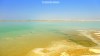
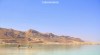
Dead Sea shores

A stark, arid landscape. Temperatures of 45°C. And a body of water that’s like a warm bath. Doesn’t sound appealing?
Well you’d be surprised. I had a week of relaxation on Israel’s Dead Sea coast at the small resort of Ein Bokek, and it was a haven for many holidaymakers.

The water is saline-rich and packed with minerals, so floating around in it aimlessly is a popular pastime. Piling on pounds of black Dead Sea mud and leaving it there until it bakes is another way to occupy the hours.

The hazy blue hues of this strange environment are entrancing, while I enjoyed the stark architecture of the sprinkling of big hotels. The calm reflections of the water and bathers drifting around in the brine just cried out to be captured. 

Go beneath the gallery to read a cautionary tale for travellers


Click first image to see gallery


Departing from Israel via Tel Aviv airport is an unnerving experience. Before you queue up at the check-in desks, there is a line of security officers, and I wasn’t prepared for at least half an hour of questions about why I’d been in the country and what I’d been doing.

The grilling became increasingly awkward and stressful. Why had I only visited the Dead Sea? Why did I have to alter my flight? Do you have the receipt for that? It felt very intrusive for someone who had innocently been relaxing by a salty pool. Three officials later and almost losing my cool, my suitcase was tagged and I was relieved to be on my way.

Only back at home did I discover the card slipped into my case which informed me it had been manually searched after check-in, which did nothing to reduce my sense of unease.

I set about doing some research and found out that it’s not uncommon to face quite tough security questioning on departure from Tel Aviv airport. As a lone male I was of immediate interest. Also, the ‘interrogation’ is a way of measuring an adverse or suspicious reaction. In my case they noticed a trembling hand and wondered if I’d seen a doctor for treatment!

Israel considers this a good method to ensure aircraft leaving its airspace are safe and is unlikely to change. It’s best to be forewarned and keep calm during the process. However, it did nothing to make me feel valued as a visitor to the country. I maintain that I won’t go there again.

Gulf sunrise

Getting up early to witness the sunrise takes a lot of effort, but it’s ultimately worth it. This particular morning I was in Doha, the capital of Qatar. I walked through the empty, grand corridors of the St Regis Hotel to the jetty next to the waters of the Arabian Gulf.

The tall buildings of this showcase city – which pulsate with colour at night – looked steely in the early light, but it soon gradually turned lustrous and golden, shared by the occasional bird and little else. The sunrise belonged to me and I was privileged to capture a little of its essence. Well worth the early alarm call…


Click first image to view the gallery

Desert sea

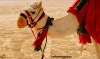
Qatar isn’t all about its ultra-modern, glittering capital city Doha. In fact, you don’t have to travel far to explore the desert wilderness of this Arabian country. A popular excursion is taking a jeep to the wastes for some exhilarating ‘dune bashing’, a spot of camel riding and to see this small country’s hidden gem.

The Khor al Adaid – or Inland Sea – is a channel of the Arabian Gulf which cuts deep into the desert. It’s a sparkling blue body of water separating Qatar and Saudi Arabia. Aside from the odd jeep, it’s calm, quiet and mostly unspoilt. There are no high-rise resorts here. You’re likely to be offered this trip in Qatar – my advice is to go and take your camera with you.


Click first image to see the gallery

Islamic beauty

Qatar is a new country full of contemporary buildings created with its staggering oil wealth. The country’s largest mosque in the capital Doha is a new build, while Katara Cultural Village, boasting lavish gold and blue mosques, is also an architectural newcomer. Doha’s Pearl, a large complex built on reclaimed land, is a recent addition as well.

But these new structures are steeped in tradition, with stylish, beautiful lines and curves. Intricate designs stay pure to Islam and do not depict human or animal forms. Instead of being sterile, these are pleasing on the eye and photographically pure and balanced.


Click first image to see the gallery

facebookfollow