Small objects

I didn’t venture very far to put my new Fuji XF60mm macro lens to the test for the first time.

The living room shelves are scattered with small objects and precious trinkets, perfect for close-up captures.

This lens turns my Fuji X-E1 into a different creature, while the needs of macro photography are entirely different. Your eyes aren’t looking outwards for the bigger picture any more.

The new lens works on aperture priority, a big shift from my usual shutter speed preference which lets the camera choose the best lens opening. An old school aperture ring on the lens needs to be engaged. It’s best to stay wide open in less bright indoor conditions – macro work seems to devour the light.

Automatic focus is quite slow, so I shifted to manual mode and used a one-touch button to control the focus and exposure, which was much smoother.

This shift of emphasis to the little world throws up other issues – it shows up just how unsteady you are (especially if you have a natural tremor like I do). The answer may be a tripod or remote release mechanism.

And my shelf-bound objects revealed every fleck of dust and fluff through the macro lens – my advice is to have a good dust and polish before you take their photograph.

These first results are pleasing. Focus is sharp and very specific on certain shots and there is a lot of milky bokeh. I wanted to capture texture abstracts on this small scale and have achieved that already. It’s a small world after all…

Click first image to launch the gallery

72nd floor abstract - clean (2)

Macro baby

This is like announcing a new birth to the world, with all the pride and excitement of a new father.

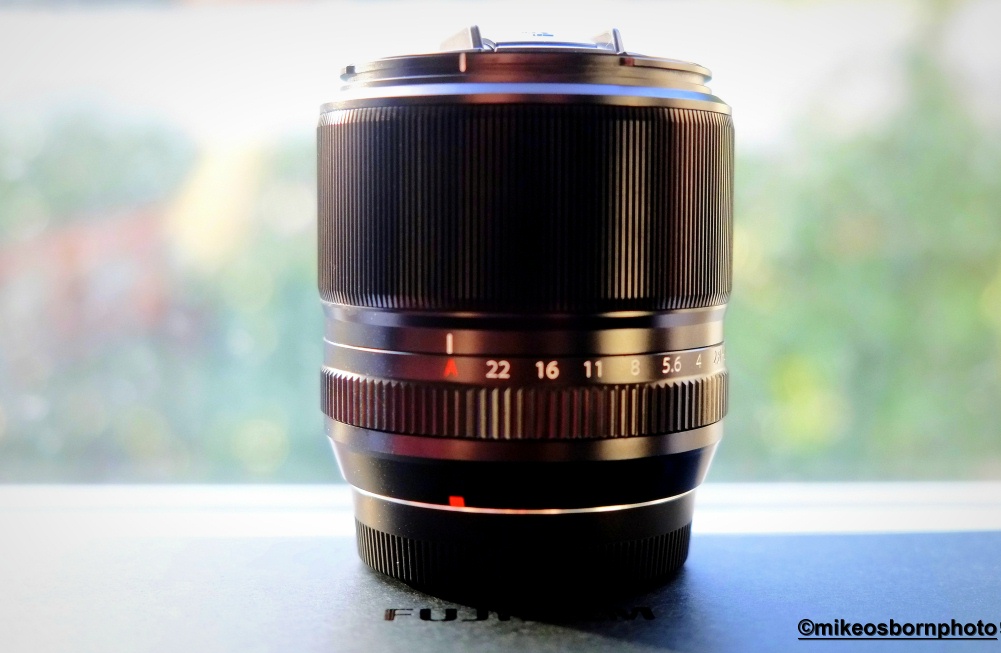
The new member of my camera family is the Fuji XF60mm macro lens, intended to widen the scope of my photography, and bring with it new possibilities.

It was quite an investment at £465, but a £100 cashback deal offered by Fuji UK – which runs until 16 January – helped lessen the blow.

Macro baby (FujiXFf60mm) monoThis new acquisition is a secondary lens for my Fuji X-E1, the camera I use for most of my work. It should prove a useful addition, as the principal lens really struggles to do any meaningful close-up shots.

Ironically, it put up a fight when taking the photographs of the XF60mm shown here. I used to revert to my little compact Lumix TZ-20 for close-ups, including a collection of winter shots when London was blanketed in show last year.

The little Lumix is likely to sit on the shelf now, although it’s still a handy little camera you can slip into your pocket. And now with an extra member of the family, I’ve invested in a new kit bag, but the load is still quite light.

Macro baby (Fuji XF60mm)The next job is to attach the new lens and take it out for a spin. Favourable reviews promise very good performance on detailed nature shots, while I’d like to use it to create macro abstracts using texture. It’s also an effective portrait lens – an area I must venture into this coming year.

If any of you have any experience of the Fuji XF60mm, please let me know. And any other general tips for getting the most out of a macro lens would be greatly appreciated.

I’ll share my first results with you as soon as they are created.

Shoes and sky

Shoes and sky

This is what you might call a long shot. It starts with my shoes and winds up in the sky.

I was using the motion panorama feature on my Fuji X-E1 for the first time, and discovered you can create a vertical panorama, consisting of several photos stitched together.

I was standing in a clearing in woods close to Barnet, in the far reaches of north London. Tomorrow, Shakespeare’s Globe Theatre will perform Henry VI in this clearing, near to a battle in the Wars of the Roses, fought in 1471.

If you can’t make it, it’s being streamed free and live on The Space arts website – now there’s a great tip.

Bridge after dark

Hammersmith by night

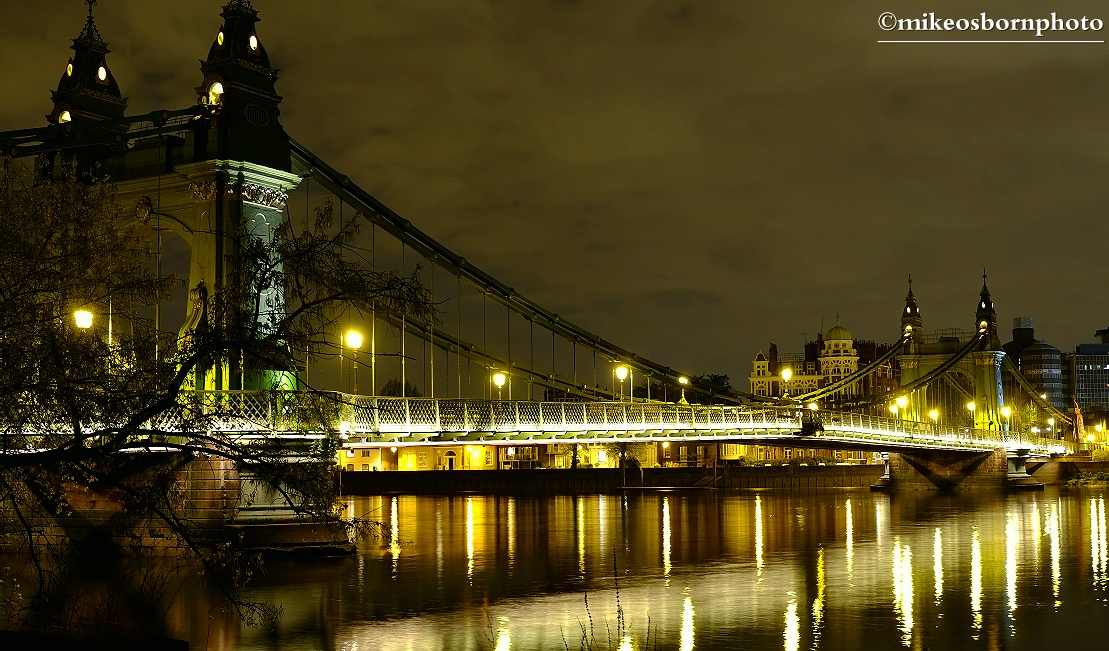
London’s Hammersmith Bridge is my personal favourite. Its graceful sweep and ornate green pillars is a beautiful site. Even more so it’s part of the River Thames in my neighbourhood, easy to enjoy on a mild Spring night.

This is the obvious place to visit for some night photography, where the lights capture the water. It’s where I came for my first ever session of low light shooting. 

But this time it was with a different camera, my Fuji X-E1, which behaved impeccably and didn’t pose any problems. I experimented with various film modes, with Velvia giving a vivid and colourful sheen compared to its standard soft and higher contrast settings. And some monochrome treatments were irresistible when it came to editing.

Some of these shots were taken from solid surfaces of this suspension bridge – the wobble caused by the traffic will ruin your long exposure efforts!

Click first image to launch the gallery

Soviet disaster

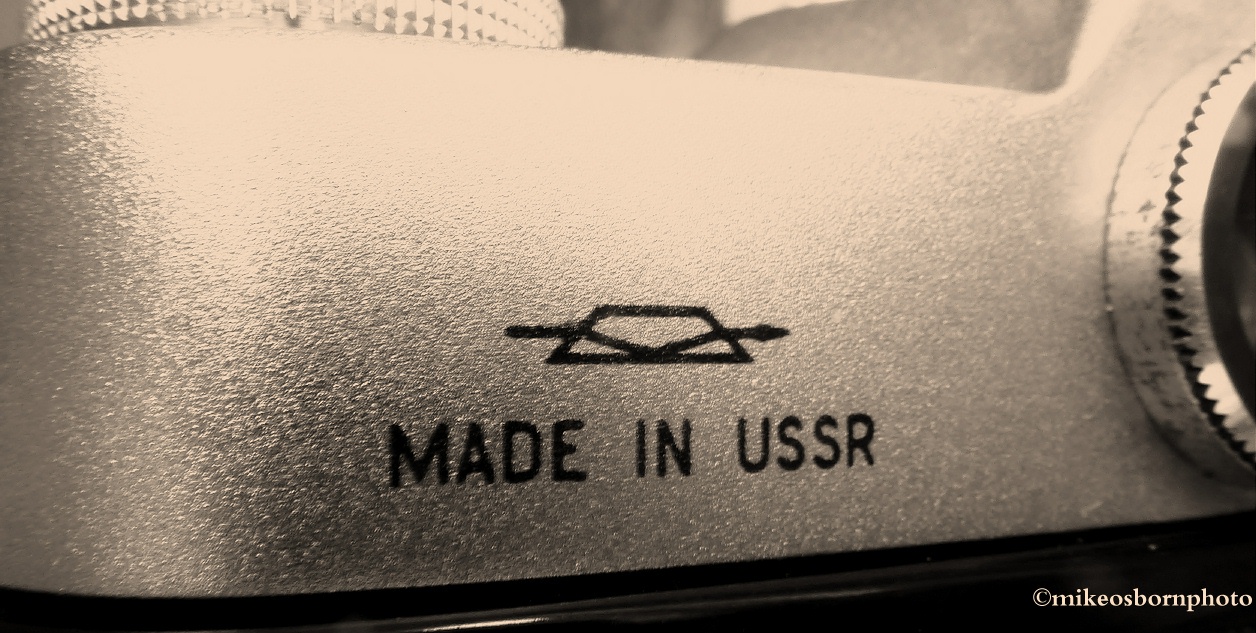
Made in USSRIn October I excitedly announced the arrival of my new camera – a Zenit made in the USSR nearly 45 years ago. It’s a mechanical beauty which takes film, and I quietly went about getting to grips with analogue.

I’ve been running my digital cameras as normal – more recently a Fujifilm X-E1 – so it’s taken a long time to come near to filling a roll of monochrome film and sending it off to the processing lab to see the first results.

This looked tantalisingly likely this weekend, so I braved the cold to capture those closing shots.

My Zenit-3 seemed to promise a couple of bonus shots, as I was expecting the shutter lever to tighten and signal the film’s end. But it just didn’t happen.

Back in the warm, I decided to manually rewind the film – only to discover there was no tension there at all. I opened up the back to find my worst fears had come true.

The film was torn from its cartridge and the entire roll was ruined.

Well the post-mortem showed that I’d made a very stupid mistake. This majestic old camera doesn’t tell me the film is nearing its end. When the mechanical counter reaches 36, that’s your cue to rewind the film. Don’t try to squeeze a couple of extra clicks.

So this was a Soviet disaster, although maybe not on the scale of Chernobyl. Another film has been loaded into the Zenit and I’m going to start all over again.

This isn’t a digital camera where you receive a polite message if your memory card is full up. It requires an old-fashioned kind of respect. It’s been tempting to give up this analogue journey and its pitfalls, but I’ll keep going.

This camera has been around longer than I have, so I’ll take notice of my elder and learn from her.